Why It Matters
Why Your Period Property Needs Lime
If your home was built before 1919, the materials used to repair and maintain it matter more than you might think. Here's why lime is the only appropriate choice.
Written by Barry Clark, lime plastering specialist since 2002.
Solid Walls Need to Breathe
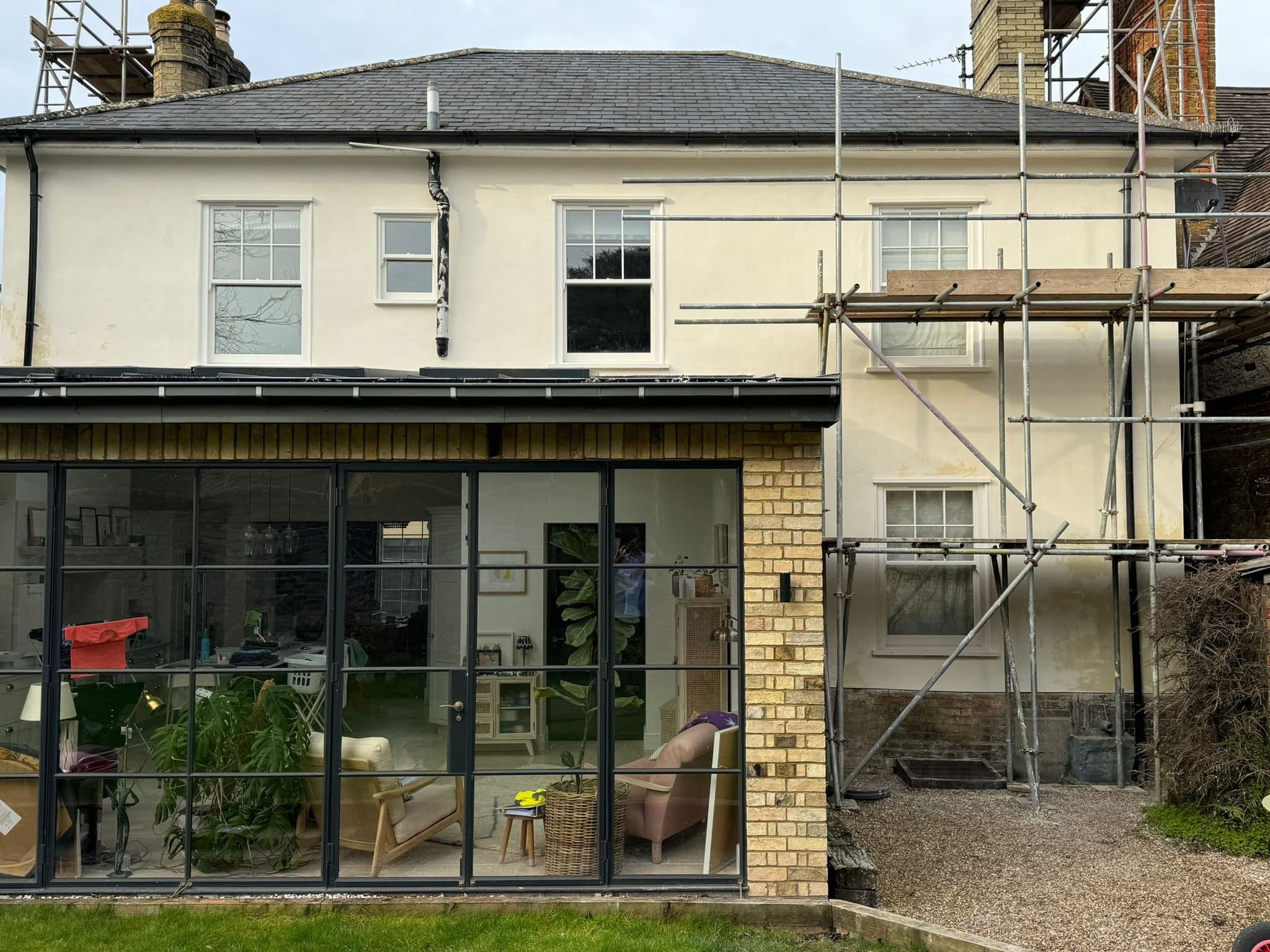
If your home was built before 1919, it almost certainly has solid walls — and solid walls need to breathe. Traditional lime plaster and render are porous and flexible, allowing moisture to move through the wall fabric as vapour rather than becoming trapped.
Modern cement and gypsum products do the opposite. Applied to an old building, they trap moisture behind a hard, impermeable surface — causing damp, timber decay, and serious structural damage over time. Lime is not simply a traditional preference; it is the only material that works correctly with the way old buildings move and manage moisture.
Lime mortar, lime render and lime plaster are the three forms of this same material system. Lime mortar bonds bricks, stone and flint masonry; lime render is the weather-facing external coat on walls and chimneys; lime plaster is the internal finish on walls and ceilings. All three are breathable and flexible, and your period property was almost certainly originally built using every one of them.
The Danger of Cement on Old Buildings
We regularly see properties where previous tradesmen have used cement-based products on solid walls and timber frames. The damage this causes is not always visible immediately, but over months and years the trapped moisture leads to black mould, rotting timbers, and crumbling masonry. In many cases the cement render itself cracks and fails because it cannot flex with the building.
Removing cement and replacing it with the correct lime-based materials is one of the most common jobs we carry out. It is also one of the most important — getting moisture management right protects the structure of your home for decades to come.
Listed Buildings and Conservation
For Grade II listed properties, using inappropriate materials without listed building consent is a legal matter. Conservation officers require that repairs and alterations use historically appropriate, breathable materials — and lime is almost always specified.
We work with homeowners, architects and conservation officers across Suffolk, Essex, Cambridgeshire and Norfolk — including Bury St Edmunds, Sudbury, Lavenham, Ipswich, Colchester, Saffron Walden, Cambridge, Ely, Norwich and Diss — to ensure the right materials are specified and applied correctly every time. If you are unsure what your property needs, we are always happy to visit and advise before any work begins.
The Three Key Benefits of Lime
Breathable
Lime allows moisture to pass through walls as vapour, keeping masonry and timber dry and healthy. Unlike cement, it never traps water behind the surface.
Flexible
Lime moves with the building as it settles and expands with the seasons, resisting cracks that rigid cement cannot handle. This is critical for timber-framed and solid-wall construction.
Conservation-approved
For listed buildings, lime is usually a planning requirement — not a choice. We understand conservation standards and work closely with conservation officers to ensure compliance.
Our Building Materials
The Right Products for Every Project
The fact that lime plaster can still be commonly found on historic buildings is a testament to the robust and tenacious nature of the mix. When dealing with timber-framed buildings, especially those built with green oak, there can be a phenomenal amount of background movement as the timber dries out — movement that far more rigid, heavy sand-based mixes simply cannot handle. We specify and apply the best lime products available, chosen to suit the age, construction and condition of each property — from base coats and finish plasters to renders robust enough for decorative pargetting.
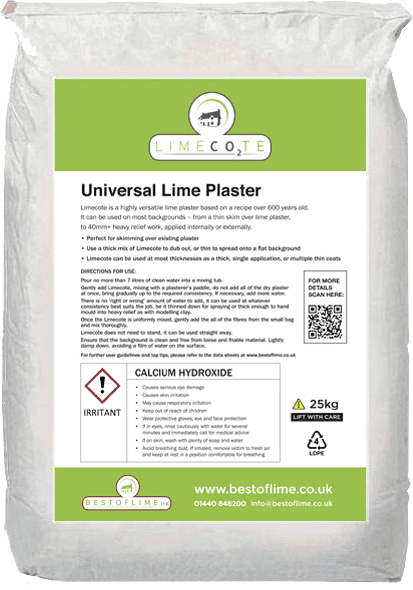
Limecote™
Limecote™ is a non-hydraulic plaster made using East Anglian chalk and Derbyshire lime. It sticks to most surfaces, is phenomenally flexible, and can be used internally or externally — from a thin finish coat over historic plaster to heavy relief pargetting.
The recipe is based on a lost English medieval lime plaster mix, once used commonly on timber-framed buildings and still easily found in 15th to 18th century properties, from humble thatched cottages to the grandest mansions. Its roots stretch back to the stucco mixes of the classical world — the connecting thread being the use of calcium carbonate (marble dust, powdered limestone or crushed chalk) in place of sand.
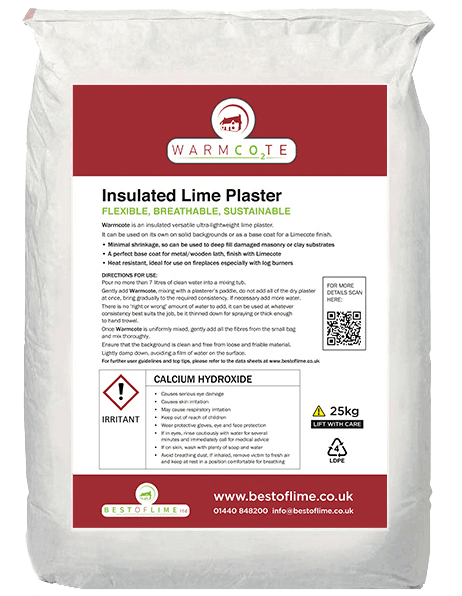
Warmcote™
Warmcote™ was developed to offer insulation for traditional, historic buildings where modern systems would be inappropriate and potentially damaging. Used with breathable boards such as cork, wood fibre or sprayed hemp, it significantly improves the living environment of a home while reducing energy bills and carbon footprint.
It is breathable, flexible, very lightweight, and can be applied at practically any thickness — the best achieved so far is 8 inches in two passes. Warmcote™ is about five times more thermally efficient than standard lime plaster, and eight times better than sand and cement. Invaluable for making good damaged clay lump, cob, masonry or daub.
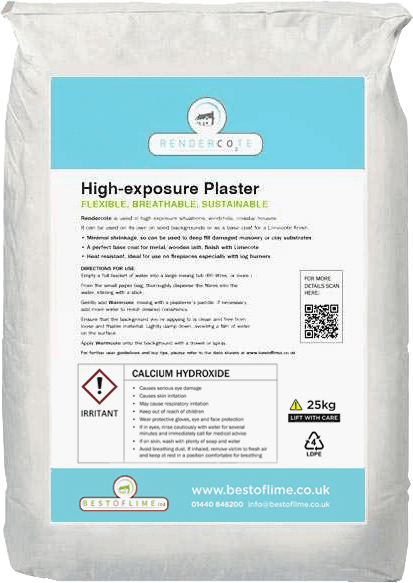
Rendercote
Rendercote is based on our best understanding of the probable mix used for the high relief stucco work at Hardwick Old Hall in Derbyshire — a lime plaster finish that has been exposed to the elements since the mid eighteenth century.
It is a blend of limestone aggregates, sourced mostly from the Buxton area, combined with a moderately hydraulic lime and natural stearate to repel liquid water while still allowing the free transport of water vapour. For masonry backgrounds only, it is intended as a robust two-coat system for high-exposure areas such as parapet walls, chimneys, plinths, windmills and lighthouses.
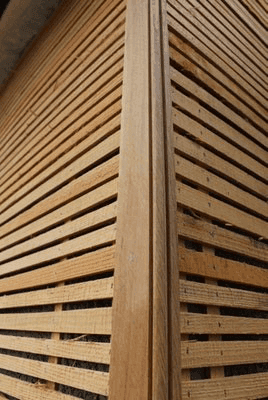
Wooden Laths
Our laths are the result of many years of observation of how different species of wood and cutting techniques behave in potentially hostile environments. Resistance to insect attack, splitting, movement, staining and all-round durability has led us to sawn Douglas Fir as the most stable long-term economic lathing option.
Douglas Fir is the strongest home-grown softwood, traditionally used for quality joinery and box sashes. It contains a resin unattractive to beetles and has a low moisture content, so it is not prone to movement once attached and drying. Traditional hand-riven laths split from oak, larch or chestnut can also be supplied.
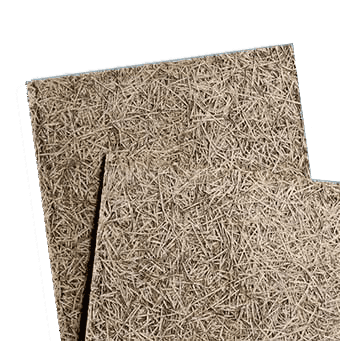
Savolit Plus
The raw timber in these boards comes from sustainably managed, PEFC-labelled forests. Savolit Plus offers low environmental impact, high compressive and flexural strength, high resistance to moisture and frost, and is 100% recyclable.
Plaster directly onto Savolit Plus with Limecote internally, or with Warmcote and Limecote externally. We also stock the fixings, washers, edge-bonding glue and 100mm jointing tape. Longer 2.4m lengths are available in 15mm (typically internal) and 25mm (typically external) thicknesses — other sizes available on request.
Lime products supplied by Best of Lime.
Not Sure What Your Property Needs?
We visit every property before quoting and are always happy to advise on the right materials and approach — at no cost or obligation.
Free Quote →